
Battling intellectual isolation
How the Accepted Society Writing Retreat changed everything for me

I received an email from a client yesterday where she praised me for balancing my research, running Accepted and being a content creator. She said she admired my discipline. What the world witnesses is a sense of heightened productivity. The reality, however, is internal fragmentation.
Being a non-traditional student, literally someone who sits at their desk day in and day out, not working alongside peers or sound-boarding ideas, results in a loneliness and isolation. As a mature student, you may feel out of place amongst your peers. In my Masters program, I felt this acutely. The majority of my cohort were either directly out of undergraduate degrees, or were older students, now retired, looking to expand their knowledge as a form of life long learning. I never felt like I fit in. My cohort was lovely, don’t get me wrong but I was lonely. Accepted Society was a place I felt belonging and community. I was surrounded by people all the time, albeit virtually.
Yet I still felt a sense of insidious loneliness when it came to writing my dissertation and balancing it against everything else going on. I was surrounded by a virtual community of people who were so supportive and yet I still felt isolated. The research and writing had been bundled up with the heavier tasks of balancing everything else, rather than embracing it as a joyful practise. I was running on fumes, unsustainably.
I will be honest that I was close to 100% pure negativity when I arrived in Oxford ahead of the Symposium for our first Writing Retreat. I was stressed, burnt out, with a Masters dissertation to write, a corporate job to balance (with it owns reports to the EU Commission), a Symposium to host (with a record number of attendees), and a PhD to begin, all within the space of two months. I had nothing left to give. I was drained, fractured, a shell of the person I am. However, by the end of that dedicated writing period, I found myself in a safe, structured, communal space space that restored the ‘why’ for me.
The retreat reflected the community’s ethos that has been the driver for the new Accepted Society: a space of belonging for non-traditional thinkers and life-long learners. It was an intentional, curated academic environment that supported those, like myself, struggling to combine research and creation. Physically working together, sharing ideas, talking through struggles and sharing meals, allowed me the opportunity to put away all my other hats (business owner, wife, friend, content creator, conference organiser), so I could show up every day as ‘the writer’.
It took time to see the impact. I resisted the momentum that getting together as a group creates. My response is usually to retreat into my own safe spaces. There was, however, break-throughs in my research. Progress that I never anticipated was only achieved through a group of friends, sitting in the library together, each working on their own projects. Hearing the quiet tapping of keyboards, or the scratching of pens on paper, from other focused writers was the opposite of intellectual isolation; it was quiet solidarity.
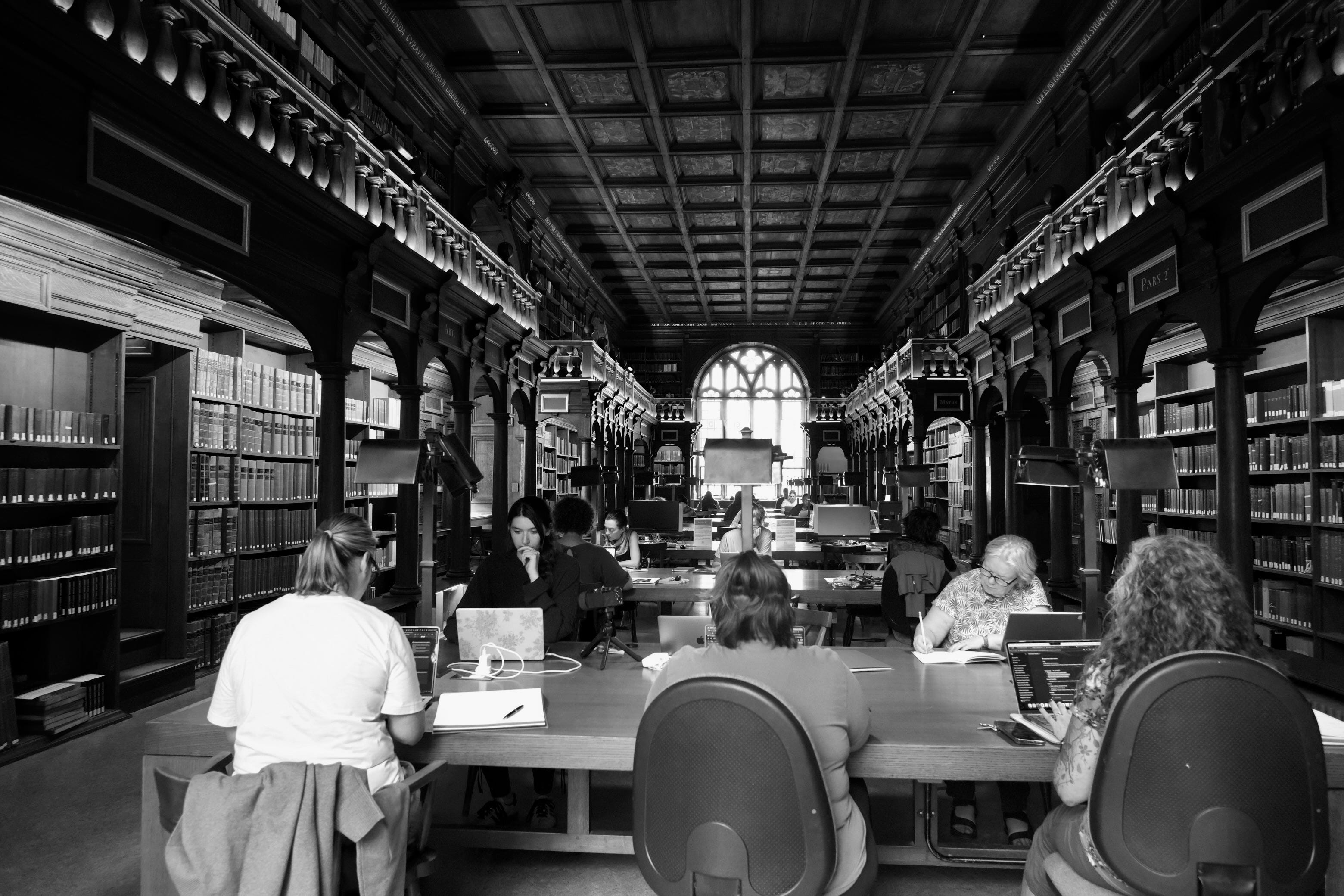
Even while the progress was being made, the moment that stood out to me was when a member of the group, who I didn’t know very well, came up to me and said to me ‘I see you’. This moment of recognition made me realise why Accepted is different. Academic progress is one thing, community belonging is another. This person saw me hiding all those hats I was trying to wear and saw I was struggling. They did not judge. They did not gloat. They provided space to be seen.
I have often reflected on this Writing Retreat, especially since we are currently planning our next one in New Haven next year. The Writing Retreat not only provided the communal research space to make progress on my writing, but it provided an opportunity for genuine connection and a recognition of a part of me that I had long masked - that I don’t have to be anyone other than myself.
A researcher, a writer, a member of a community.
These Writing Retreats I now view as a necessary investment in my own intellectual and creative health. The best thing you can do for yourself and your work is to carve out a protected space for it, and the best way I found to do that was with a supportive community.
The writing retreat experience, and the community you all offered, changed my life.
An ecosystem that supports your momentum. The effort to be a whole community for yourself diverts so much energy. 🩶